Same Plant. Different Nutritional Reality.
The moment a seed “wakes up”
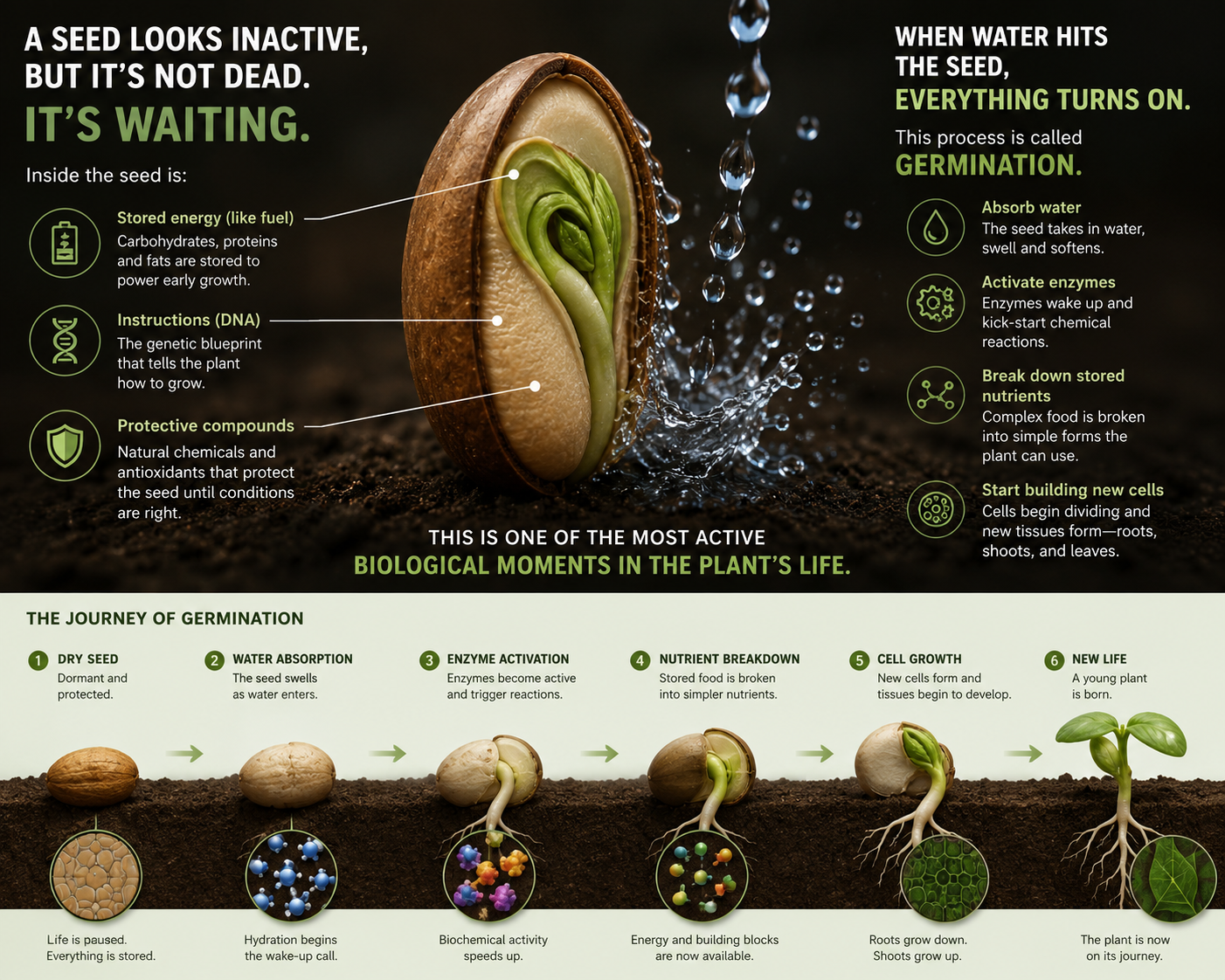
A seed looks inactive, but it’s not dead.
It’s waiting.
Inside the seed is:
Stored energy (like fuel)
Instructions (DNA)
Protective compounds
When water hits the seed, everything turns on.
This process is called germination.
The seed begins to:
Absorb water
Activate enzymes
Break down stored nutrients
Start building new cells
This is one of the most active biological moments in the plant’s life.
What happens during early growth (microgreen stage)
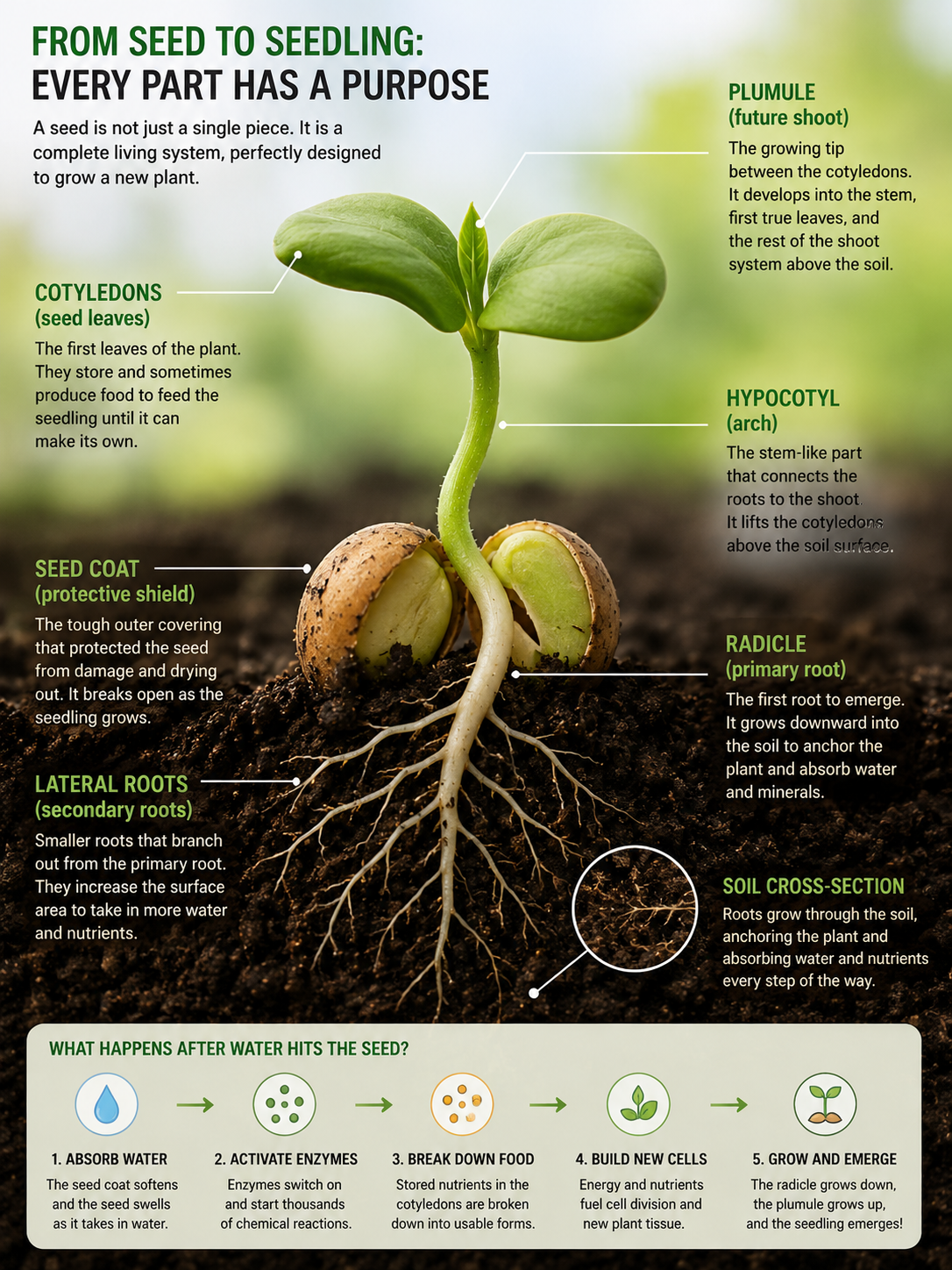
As the seed sprouts and becomes a microgreen, the plant enters a rapid growth phase.
At this stage, it is:
1. Breaking down stored food
The seed stores nutrients like:
Proteins (large molecules used to build plant structure and enzymes)
Starches (complex carbohydrates that store energy)
Fats (dense energy reserves for early growth)
Now enzymes break them into:
Amino acids (small building blocks used to make new cells and proteins)
Simple sugars (quick energy the plant can immediately use)
Fatty acids (energy + components for building cell membranes)
These smaller pieces are:
Easier for the plant to use
Also easier for your body to absorb
2. Building defense systems
The young plant is fragile. It doesn’t have thick leaves or strong structure yet.
So it protects itself by producing:
Antioxidants (fight damage)
Phytonutrients (plant defense chemicals)
Protective enzymes
These compounds help the plant survive stress from:
Light
Temperature
Microbes
This is why microgreens are rich in compounds that also help protect your cells.
3. Growing at maximum speed
The plant is trying to:
Reach light
Expand leaves
Build roots
To do this, it increases:
Metabolism (how fast it runs)
Nutrient activity
Cellular division
Everything is happening fast and concentrated.
What changes as the plant grows bigger
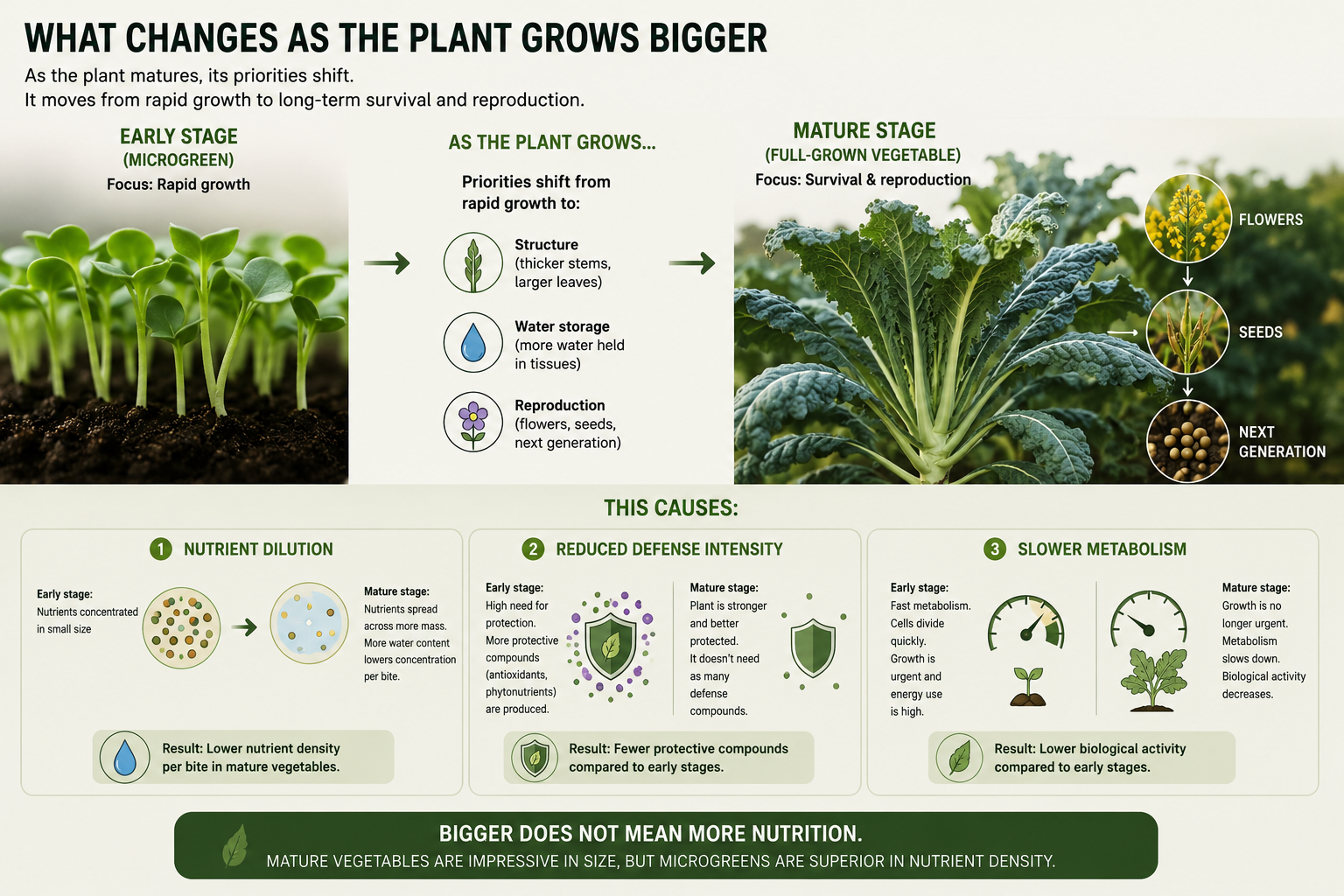
As the plant becomes a mature vegetable, its priorities shift.
Instead of rapid growth, it focuses on:
Structure (thicker stems, larger leaves)
Water storage
Reproduction (flowers, seeds)
This causes:
Nutrient dilution
Nutrients spread across more mass
More water content lowers concentration per bite
Reduced defense intensity
The plant is stronger now
It doesn’t need as many protective compounds
Slower metabolism
Growth is no longer urgent
Biological activity decreases compared to early stages
What this means inside your body
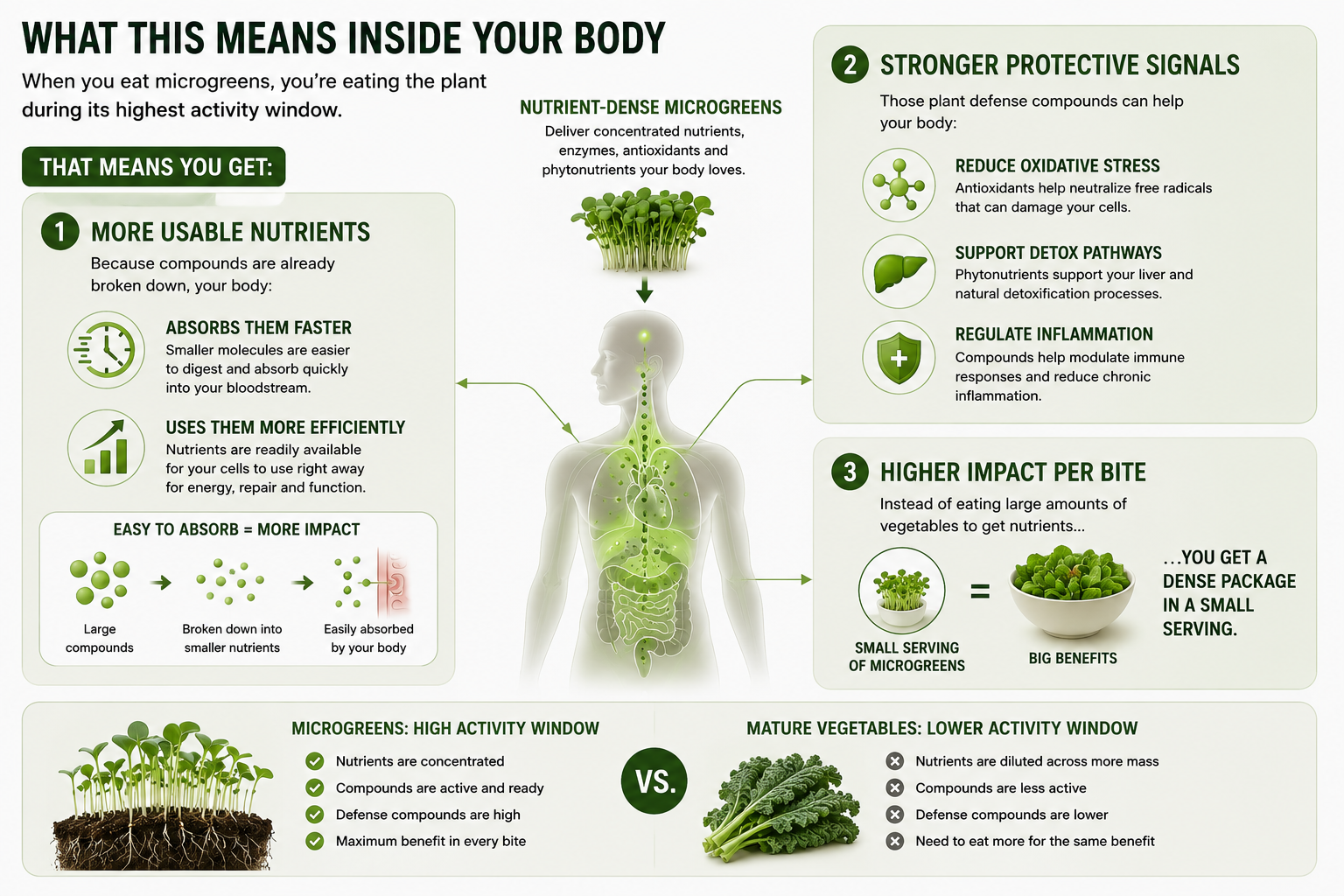
When you eat microgreens, you’re eating the plant during its highest activity window.
That means you get:
More usable nutrients
Because compounds are already broken down, your body:
Absorbs them faster
Uses them more efficiently
Stronger protective signals
Those plant defense compounds can help your body:
Reduce oxidative stress
Support detox pathways
Regulate inflammation
Higher impact per bite
Instead of eating large amounts of vegetables to get nutrients…
You get a dense package in a small serving.
The bottom line
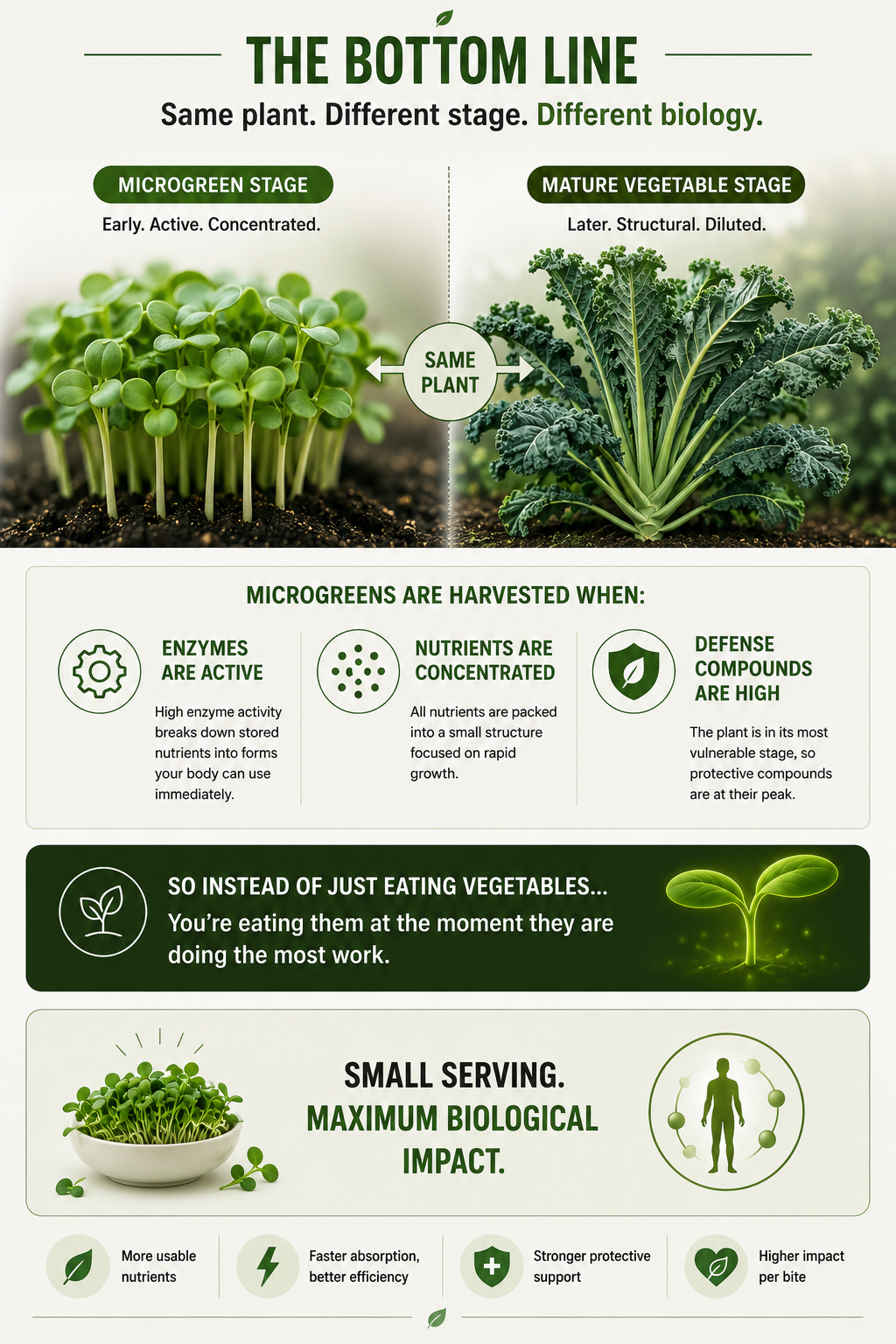
Same plant. Different stage. Different biology.
Microgreens are harvested when:
Enzymes are active
Nutrients are concentrated
Defense compounds are high
So instead of just eating vegetables…
You’re eating them at the moment they are doing the most work.
Small serving. Maximum biological impact.